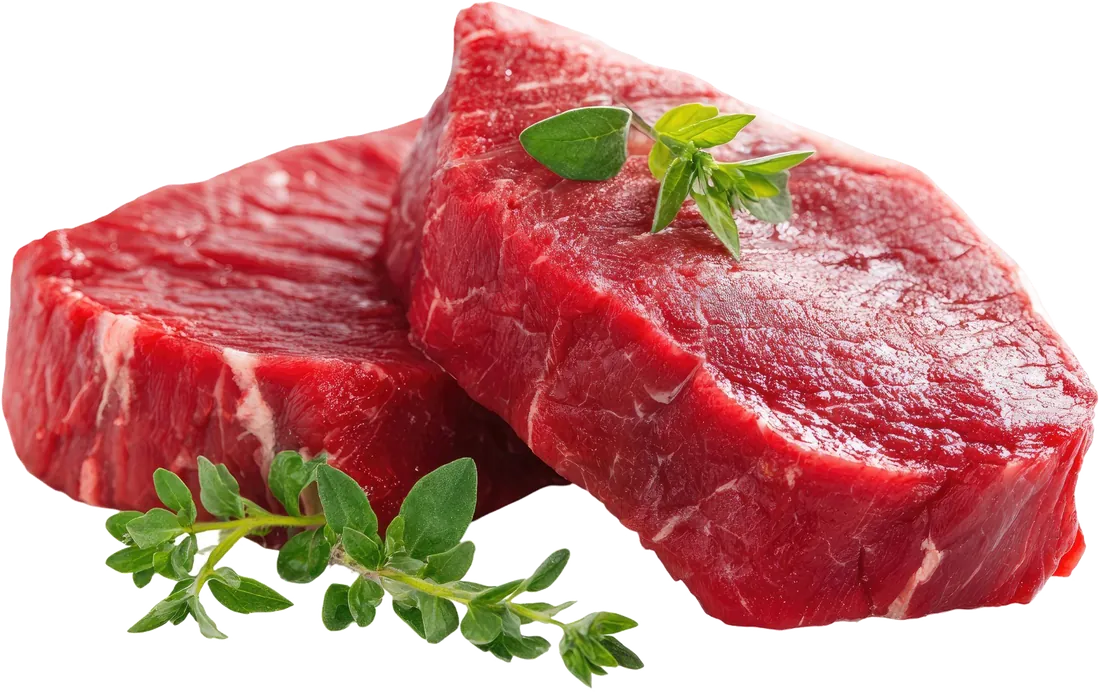
In short: pasture-raised cattle graze outdoors and eat mostly grass and hay. Their beef is usually leaner, darker and deeper in flavour than beef from grain-fed animals. Because it is leaner, cook it a little shorter.
What is grass-fed beef?
It comes from cattle that spend most of their lives on pasture, eating their natural diet: grass, clover and, in winter, hay. Industrial cattle are often finished on grain to gain weight faster. A pasture-raised animal grows more slowly and moves more.
How it differs
- Flavour: deeper and beefier, sometimes slightly grassy.
- Fat: often more yellow, from the beta-carotene in grass.
- Texture: denser and leaner, with less marbling.
Nutrition
Studies show beef from grass-fed cattle tends to have less fat and a better fatty-acid profile, including more omega-3 and conjugated linoleic acid (CLA), than beef from grain-fed animals. Beef is in any case a good source of protein, iron, zinc and vitamin B12.
Where our beef comes from
We do not raise the cattle ourselves. We work with small Estonian farms where cattle grow on pasture in a calm environment. We select the animals, cut the meat by hand, vacuum-pack each piece and deliver it in Tallinn and Harju county.
How to cook it
- Cook steaks 10–20% shorter than usual and check the core temperature.
- Bring the meat to room temperature and pat it dry first.
- For slow cooking use a lower temperature (130–150 °C) with a lid on.
- Rest steaks for 5–8 minutes after cooking.